Areas of application
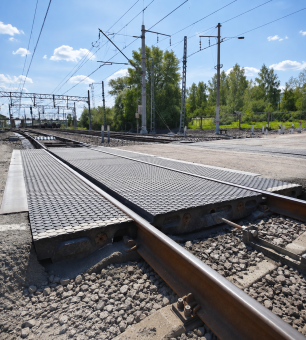
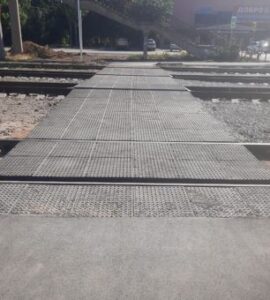
A1.USIN STS was developed for elastic, waterproof sealing of horizontal (expansion) joints with a maximum slope of 5%. It is suitable for standard or chemically resistant joints. Repair of expansion joints on a monolithic reinforced concrete base. Installation of working and expansion joints. Preservation of cracks and repair of chips in reinforced concrete pavements. For joints subject to vibration and deformation.
Advantages
-
High curing speed and short maturation time before operation (wheel load is allowed after 12 hours);
-
Excellent resistance to abrasive wear under wheeled traffic;
-
High adhesion to metal bases, concrete surfaces, and waterproofing coatings of the span structure;
-
High elasticity and resistance to impact loads;
-
Solvent-free and has no volume shrinkage;
-
Wide operating temperature range from -50 to +90 (short-term +130) ℃;
-
Applied by cold method;
-
Resistant to salt solutions (including de-icing agents), alkalis, and acids.
Application technology
Working conditions
-
Minimum ambient and base temperature +5 ℃;
-
Maximum ambient and base temperature +35 ℃.
-
When applying the material, the temperature must always be 3°C above the dew point. The conditions must be observed during the work and until the materials are fully cured.
-
The temperature of the A1.USIN STS components before use must be at least +10°C and not more than +30 ℃; it is recommended to keep the components before use at a temperature of +15…+23 ℃ for 12 hours.
-
The conditions must be observed during the work and until the materials are fully cured.
-
Quartz sand of 0.1–0.3 mm fraction or granite crushed stone of 5-10 / 10-20 fraction may be added to the A1.USIN STS product.
-
Mixing proportions of the polymer part A+B+C (accelerator is added at 1-2% depending on temperature conditions).
Surface preparation
Concrete
The base must be strong (concrete class not less than B20), cleaned of dust, dirt, petroleum products, oil, cement laitance, paint, and other materials. The base should be prepared by shot blasting or milling to remove cement laitance and obtain an open, rough surface. Areas of weak concrete must be removed: surface defects such as voids and cavities must be opened up. Wet areas must be dried. If necessary, the prepared base (if concrete moisture exceeds 5%) should be treated with A1.USIN PU90 primer using a brush/roller, with a consumption of 0.2 kg/m².
It should be remembered that mechanical preparation of the base is used not only to remove contaminants but also to increase the adhesion of the coating to the base. The more textured the surface obtained as a result of treatment, the higher the adhesion of the coating to the base and, consequently, the higher the resistance to dynamic loads.
Metal
Degrease the metal surface to the first degree according to GOST 9.402. Clean from scale, rust, and old paint by abrasive blasting or mechanical means to a degree not lower than 2 according to GOST 9.402 (Sa 2 ½ according to GOST R ISO 8501-1-2014). Preparation to Sa 2 degree is allowed depending on the conditions of further operation. Recommended surface roughness is 20–40 μm according to ISO 8503–2. Manual cleaning to a degree not lower than 2 according to GOST 9.402 is allowed (to a degree not lower than St 2 according to GOST R ISO 8501-1-2014). Preparation of working compounds. Mix components A and B (the accelerator is added if it is necessary to accelerate the polymerization process at low temperatures) of A1.USIN STS in a clean, dry container with a volume of at least 20 liters.
Mixing should be done using a pneumatic/electric mixer (as well as a spiral whisk for dry building mixes) at 400–600 rpm for 1.5–2 minutes, then add component B and mix for 5-7 minutes, paying special attention to the walls and bottom of the container.